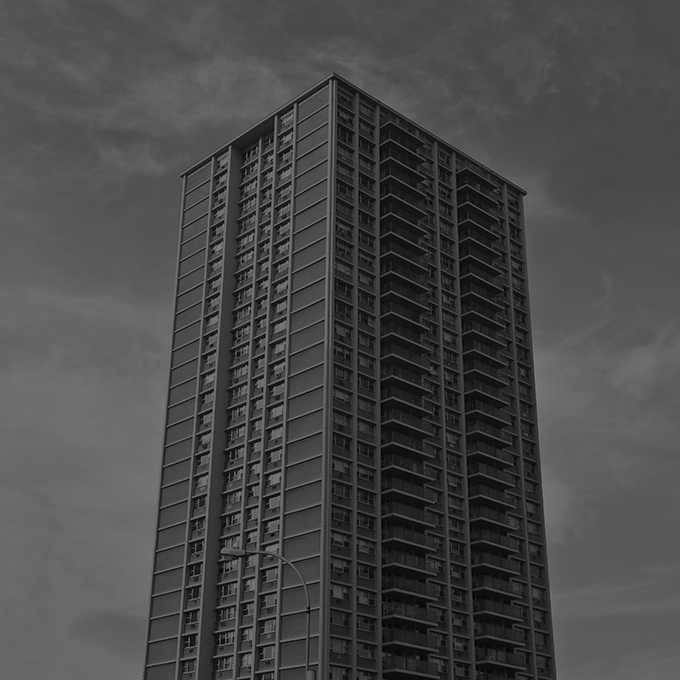

GTA FACES RENTAL UNIT SHORTFALL OF 235,000 UNITS
TYLOR CHOI - RENX
The Greater Toronto Area (GTA) is facing a “severe” supply gap of 235,000 rental housing units over the next decade according to building industry association BILD, and it expects that shortfall to continue to widen.
Development conditions in the apartment market have slightly improved since 2023, driven by efforts to cut taxes on new buildings as well as cities such as Mississauga and Vaughan reducing development charges and property taxes. However, inflation and rising construction costs have offset many of the benefits.
“The deficit that we’re looking at seems to be getting larger from an amount of purpose-built rental units being built versus what the anticipated demand will be,” Justin Sherwood, the senior vice-president of research, stakeholder relations and communications at BILD, said in an interview with RENX.
Demand for rental housing remains elevated in the GTA. Immigration has added over 550,000 people to the region over the past two years, putting pressure on rental supply.
The report states over 200,000 purpose-built rental units in the planning stages are currently sidelined. More has to be done to improve the economic feasibility of “desirable” rental housing that is not intended to be converted to an owned dwelling, Sherwood said.
As one means to address concerns about high housing costs, governments across Canada and the housing industry have emphasized the need to significantly boost rental supply. demand for rental housing remains elevated in the GTA. Immigration has added over 550,000 people to the region over the past two years, putting pressure on rental supply.
The GTA rental vacancy rate in 2024 was 2.5 per cent, the highest in 15 years other than during the COVID-19 pandemic. The average during the past decade was 1.5 per cent, BILD's report states. With the federal government lowering immigration numbers in recent months, and almost 35,000 rental units added to the market in 2024 (more than doubling the 10-year average), asking rents slightly decreased over 2024 and 2025.
As an example, the average asking price for a purpose-built rental or condo apartment in March fell six per cent year-over-year to $2,548, the lowest in 30 months. But the rent relief is likely temporary, as it is “largely because there’s a big amount of PBR units coming on stream right now,” Sherwood explained.
One problem on the horizon, the report states, is that the growth of rental supply is projected to fall off a cliff. BILD found condo apartment starts, a building type which provides the largest proportion of rental supply in the GTA, halved in 2024 compared to 2023 to a 25-year low of just under 8,800 units.
Though purpose-built rental starts rose seven per cent from 2023 to 2024 to 6,637 units, primarily because of the tax relief and development charge cuts, rental demand is anticipated to far outpace the supply. The supply deficit of rental housing is expected to rise by 121,000 units over the next 10 years, on top of 114,000 units from 2016 to 2024.
Purpose-built rentals will have to do most of the heavy lifting to meet this supply gulf with condo investors retreating and few buildings under construction. To meet a goal of delivering an additional 100,000 rental units beyond what the market is on track to offer, starts must increase to 16,000 to 19,000 units per year, BILD says.
“The story’s not one of immigration . . . It is failure to be able to create the economic conditions that allow us to build housing at rate that is affordable,” Sherwood said.
As institutional investors are not finding the returns they need to finance purpose-built rentals, Sherwood said it is vital to have all three levels of government cooperate to reduce the cost of construction and make their development more economically feasible.
Recommendations are:
- expanding the Canada Mortgage and Housing Corporation’s funding programs;
- attracting foreign capital for housing with steps like defining housing as critical infrastructure, or lifting the foreign buyer ban; and
- the Ontario government compelling municipalities to use their development charge reserves for projects with a rental or mixed-use component.
CFR COMMENTARY...
Many state that purpose built rentals are being built all over the place. This is true but the real amount is far below the amount need to house those coming into the region. Many apartment building owners today are seeing rents soften. This is a short term issue as rents taper from huge gains in the past and the short term reduction in students and immigration.... but as we see from above there are still more and more coming in but less and less being built. Economics 101 teaches us what when supply goes down and demand goes up so do prices - which hear means rents. Apartment Buyers need to step up and look at the next 18 months as being a great buying opportunity. Rents WILL move up and so too will values.
RENTERS STAYING IN PLACE LONGER
REMI
With Canadians grappling with rising costs on everything from housing to household bills, new data shows that renting is no longer a temporary stage on the path to homeownership. Instead, it is increasingly becoming a long-term necessity that relies heavily on dual incomes to remain sustainable. The Rent Cheque: Q3 2025 Rental Intelligence Report by SingleKey reveals that the traditional image of renters as young and transient no longer reflects reality. Today’s renters are older, more settled, and often raising families while facing mounting affordability challenges. The report found that the median age of a Canadian renter is 32, and 11.7 per cent of renters have children.
“The idea that renters are young, mobile, and just passing through no longer holds true,” said Viler Lika, Founder & CEO of SingleKey. “Renting is now a long-term reality for many Canadians in their 30s and 40s—often with kids, careers, and no clear path to home-ownership.” After analyzing thousands of rental applications between July and September 2025, the online platform determined that the average renter earns $67,537 annually. However, household incomes average $109,000—a 35 per cent increase driven by dual-income households. Cohabiting and shared earnings have become essential to meeting rental standards, underscoring how renters are older and more settled than in past generations.
Despite reports of rent prices softening, affordability remains strained as other living costs rise. Nationally, renters spend approximately 38.6 per cent of their income on rent and debt repayments, well above the 30 per cent affordability benchmark. In Vancouver, that figure climbs to 41.6 per cent, highlighting growing financial vulnerability for tenants and increased risk exposure for landlords.
“Affordable” markets carry hidden risks
Lower rent markets may appear more accessible, but SingleKey’s data shows they often mask higher financial instability. Renters in major hubs like Toronto and Halifax tend to have stronger credit scores (735 and 705), lower delinquency rates (4.3% and 6.7%), and fewer bankruptcies (1.1% and 1.7%).
By contrast, Winnipeg, Calgary, and Montreal—where average monthly rents are among the lowest ($1,713, $2,028, and $1,605, respectively)—show significantly higher delinquency and bankruptcy rates. Winnipeg stands out as the riskiest market, with nearly one in five tenants (18.9%) in collections and a bankruptcy rate (3.9%) more than triple Toronto’s.
Suburban and rural renters also face greater instability: credit scores are 2–34 points lower, and bankruptcy rates 0.4–3.2 per cent higher compared to urban tenants. Lower upfront costs, the report warns, do not necessarily translate into long-term affordability.
“Renting has changed in Canada, and the numbers prove it,” concluded Lika. “We’re seeing responsible, creditworthy renters in their 30s spending over a third of their income just to keep up.”
RENTS CONTINUE TO SOFTEN
Rentals.ca
Apartment Rents Down from Three Years Ago in B.C. and Ontario
Average asking rents for purpose-built and condo apartments declined from a year ago across all provinces reported except for Saskatchewan (+0.5% to $1,368) and Nova Scotia (+1.8% to $2,302). Annual declines for average apartment rents were largest in B.C. (-6.4% to $2,362), Alberta (-4.3% to $1,682), and Ontario (-3.5% to $2,270).
In both B.C. and Ontario, apartment rents have fallen for the past three years, down 2.6% and 5.2%, respectively, during the period. All other provinces have seen apartment rents rise considerably compared to three years ago, led by a 21.8% increase in Saskatchewan. In Alberta and Quebec, apartment rents were down compared to two years ago but were 15.3% and 8.1% higher, respectively, than three years ago.
Vancouver and Toronto Rents Lowest in Over Three Years
For the third month in a row, asking rents for apartments fell on an annual basis across each of Canada’s six largest markets. Annual declines remained strongest in Vancouver (-6.8% to $2,692), Calgary (-5.9% to $1,844), and Toronto (-5.0% to $2,508). More moderate annual decreases continued in Montreal (-3.3% to $1,936) and Edmonton (-2.8% to $1,512), with rents holding relatively steady over the past year in Ottawa (-0.7% to $2,157).
Apartment rents in Vancouver fell on an annual basis for the 24th consecutive month to reach their lowest level since March 2022, dropping 14.5% over the past three years. In Toronto, apartment rents were down 16.0% in the past three years, falling to their lowest level since May 2022. Calgary apartment rents have declined in each of the past 16 months and were at their lowest since January 2023.
Three-year rent growth for apartments was observed in Ottawa (+2.9%) and Montreal (+2.6%), with Edmonton leading rent growth among Canada's largest markets in the past three years, with a 14.9% increase.

THE APARTMENT GROUP
Together the team has completed over 1,500 transactions and has sold over $8.0 billion in apartments and development land. Put us to work for you and see the results. NO ONE has sold more buildings than our group. Experience, knowledge and professionalism will insure you get the right deal or the highest price if you are selling.
The Apartment Group is a dedicated team of professionals specializing in the sale of multi-residential investment properties. With over 40 years of combined experience, the team brings together their strengths including strong negotiation and sales skills along with highly technical market analysis and appraisal methods.
We are a boutique Brokerage but have the capabilities of the larger houses without the overhead. We have: an internal database of over 10,500 active apartment and land Buyers; a list of all apartment building owners in the Greater Toronto Area; our web site gets over 50,000 hits a month; we highlight properties for sale through our newsletter which reaches 10,000 investors monthly.
MITCHELL CHANG
President & Owner,
Salesperson
Direct: 416-219-0436
mchang@cfrealty.ca
LORENZO DIGIANFELICE, AACI
Broker of Record, Owner
Direct 416-417-9098
ldigianfelice@cfrealty.ca
JAKE RINGWALD
Salesperson
Direct 416-996-7713
jringwald@cfrealty.ca