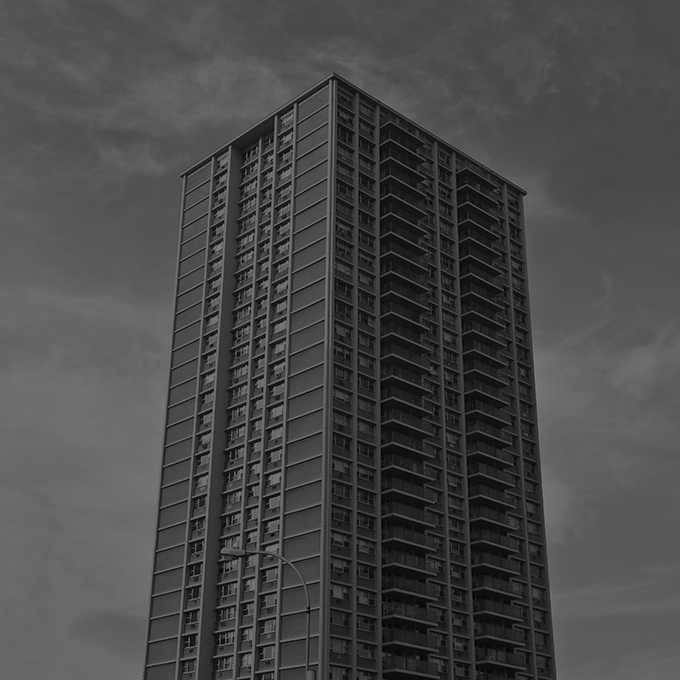

CANADIAN REAL ESTATE UNDER PERFORMING
REMI - BARBARA CARSS
Institutional investors garnered anemic returns from their Canadian commercial real estate holdings in 2025. Newly released results from the MSCI REALPAC Canada Property Index peg the all-asset average total return at 1.3 per cent across 50 portfolios collectively valued at roughly CAD $160 billion. The average total return on 2,171 standing investments came in at 2.1 per cent, based on 4.9 per cent income return against a 2.7 per cent decline in capital value.
Canadian returns in 2024 were middling in the pack of countries represented in MSCI’s global property index, but are near the bottom for 2025 — likely ahead of only Luxembourg once the fourth quarter numbers are firmed up for many of the countries where MSCI produces indices. That’s also in a year when equities and bonds made significantly better gains.
“Canadian real estate is one of the worst performing markets globally, sorry to say,” Peter Koitsopoulos, MSCI’s vice president, real estate client coverage, told the gathering on hand in Toronto last week for the release of the index results.
“In many cases, what we did see when properties would sell, they sold below book value in our index,” Koitsopoulos reported. “Canada has been in a market where we’ve been taking slower write-downs over a prolonged period of time.”
Ugo Bizzarri, chief executive officer of Hazelview Investments suggests capital has a similar quest, creating pressure for funds to buy, operate and sell accordingly. “If anyone says raising capital is easy today, they’re lying, but the question is not about the availability of capital, it is what does capital want? Capital wants alpha today. It’s not just getting core asset returns,” he asserted.
Weakened values signal it’s a good time to buy. Bizzarri expressed confidence in: small-bay industrial properties with opportunities for rent growth on turnover; existing multifamily; and new multifamily development that can tap into attractive federal financing and lower construction costs (as condominium building fizzles) and be ready to lease up in what he anticipates will be a favourable market for landlords four to five years from now. Optimal operations and disposition complete the formula.
“Waiting for 20 years to sell an asset, that’s not effective. You’ve got to sell after four or five years or else you’re just going to ride back down the cycle,” Bizzarri said. “To have more alpha in the system, you have to be more of a trader. If you think you have maximized the value of a particular asset, then you should sell it.”
RENTAL CONSTRUCTION SURGED Q4-2025
REMI
New data from Urbanation Inc. shows rental construction accelerated sharply in Q4‑2025, with 9,821 purpose-built rental units breaking ground—up 42 per cent from 2024 and the highest annual total since the 1970s. By year-end, the number of purpose-built rentals under construction across the GTHA climbed to 27,815, a 77 per cent increase over the past five years.
“Some developers are looking past the current softness in the market by starting construction on new rental projects, with an understanding that conditions will improve in the years ahead as condo supply dries up,” said Shaun Hildebrand, President of Urbanation. “But even with rental starts reaching nearly 10,000 units last year, it won’t likely be enough to move the needle on improving affordability. The GTHA currently has over 150,000 approved rentals in the pipeline waiting to become economically feasible.”
The acceleration in development occurred despite the rental market being at its weakest point since the pandemic. The vacancy rate for buildings completed since 2000 rose to 3.7 per cent in Q4‑2025, up from 3.4 per cent a year earlier and the highest level since Q4‑2020 (5.5%).
Purpose-built rental completions also reached a more than 40‑year high, with 6,379 units delivered in 2025. More than half of these units (59%) remained available for lease at year-end. In total, 44 buildings were still in their initial lease-up phase and had not yet reached stabilization (defined as 95% occupancy). This included 23 buildings completed in 2025, 14 completed in 2024, and seven completed between 2022 and 2023.
The softening in the rental market was driven not only by rising purpose-built supply but also by sustained high levels of condo completions—about half of which typically enter the rental pool—alongside slowing population growth, increased economic uncertainty, and ongoing affordability challenges. Among purpose-built rentals completed since 2000 and available for lease in Q4, average asking rents were $2,916 per month for an average unit size of 720 square feet. While this represented a 2% annual decline, rents remained 16% higher than five years earlier.
To attract tenants, rental operators continued to rely heavily on incentives. Two-thirds of buildings completed since 2000 offered some form of concession in Q4, with two months of free rent emerging as the most common incentive, offered by 35% of buildings. After adjusting for incentives, effective rents averaged $2,565—down 5.5 per cent from the incentive-adjusted average of $2,713 in Q4‑2024.
Purpose-built rentals also faced mounting competition from the condo rental market, where rents continued to fall. Condo rents declined by an average of 4.0 per cent in 2025, the steepest drop since 2020, when rents fell 6.7 per cent. This occurred despite a record 64,531 condo lease transactions last year. Investor-owned supply continued to grow even as many units generated deeply negative cash flow. For condo units completed in 2025, monthly ownership costs—including mortgage payments, condo fees, and property taxes—exceeded achieved rents by an average of $1,338.
Inflation is Holding Steady?
StatsCan
The Consumer Price Index (CPI) rose 2.3% on a year-over-year basis in January, following a 2.4% increase in December. The gasoline price index was the largest contributor to deceleration in headline inflation, with a larger decline in January compared with December. Excluding gasoline, the CPI rose 3.0% in January, matching the increase in December. Prices at the pump fell 16.7% year over year in January, after a 13.8% decline in December. The larger year-over-year decline was mainly due to a base-year effect. The index rose 0.5% month over month in January 2026, compared with a 4.0% increase in January 2025, when crude oil prices rose. Additionally, the partial reintroduction of the provincial gas tax in Manitoba in January 2025 is no longer impacting the 12-month movement.
Indexes with year-over-year movements impacted by the temporary GST/HST break in January 2025 continued to put upward pressure on the year-over-year all-items increase in January 2026. Of the affected indexes, the CPI continued to be most impacted by acceleration in prices for restaurant meals, and to a lesser degree, prices for alcoholic beverages, toys and children's clothing.
Excluding food and energy, the CPI rose 2.4% year over year in January, following a 2.5% increase in December.
Since early 2024, growth in shelter costs has slowed year over year. In January 2026, prices continued to decelerate, rising 1.7%. This is the first time in nearly five years that year-over-year shelter price growth has fallen below 2.0%. Slower price growth for rent and mortgage interest cost drove the deceleration.
Rent prices rose at a slower pace year over year in January (+4.3%) than in December (+4.9%). Rent prices decelerated the most in Prince Edward Island (+0.2%) and Saskatchewan (+1.8%).
The mortgage interest cost index rose 1.2% year over year in January, following a 1.7% increase in December. This index has been decelerating since September 2023.

THE APARTMENT GROUP
Together the team has completed over 1,500 transactions and has sold over $8.0 billion in apartments and development land. Put us to work for you and see the results. NO ONE has sold more buildings than our group. Experience, knowledge and professionalism will insure you get the right deal or the highest price if you are selling.
The Apartment Group is a dedicated team of professionals specializing in the sale of multi-residential investment properties. With over 40 years of combined experience, the team brings together their strengths including strong negotiation and sales skills along with highly technical market analysis and appraisal methods.
We are a boutique Brokerage but have the capabilities of the larger houses without the overhead. We have: an internal database of over 10,500 active apartment and land Buyers; a list of all apartment building owners in the Greater Toronto Area; our web site gets over 50,000 hits a month; we highlight properties for sale through our newsletter which reaches 10,000 investors monthly.
MITCHELL CHANG
President & Owner,
Salesperson
Direct: 416-219-0436
mchang@cfrealty.ca
LORENZO DIGIANFELICE, AACI
Broker of Record, Owner
Direct 416-417-9098
ldigianfelice@cfrealty.ca
JAKE RINGWALD
Salesperson
Direct 416-996-7713
jringwald@cfrealty.ca