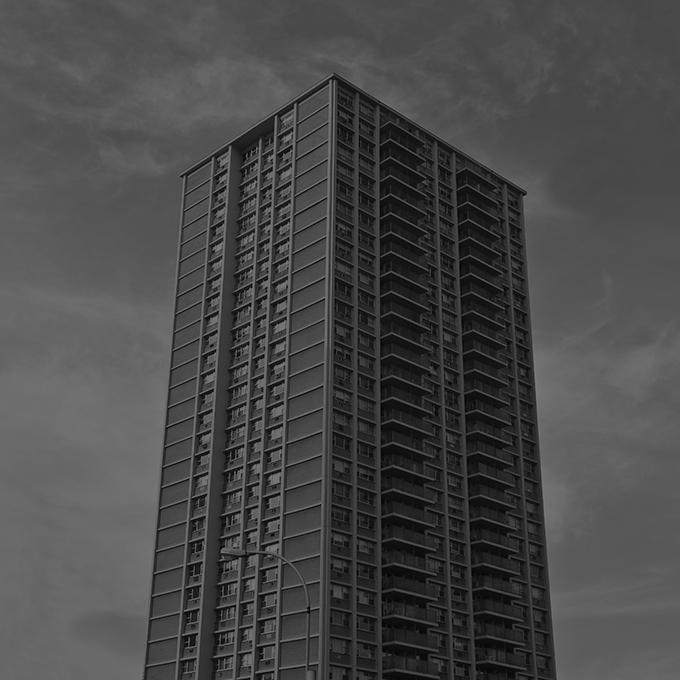

MORE APARTMENTS BUILT BUT STILL UNAFFORDABLE
COSTAR - Christian Gravenor
Canada's housing shortage has taken a turn, with newer apartment buildings having higher vacancies than older buildings. The reason, analysts say, is that renters are prefering lower rents to higher finishes.
Apartment buildings in downtown Montreal completed since 2020 have a vacancy rate of 16.6%, according to CoStar data, while those opened before 2020 have a vacancy rate of just 3.1%. Downtown Toronto shows similar demand, with vacancy standing at 16.1% in apartment buildings completed since 2020, compared with 3.4% in older stock.
Landlords in a number of new projects are offering free rent and other incentives to attract tenants, while owners of older buildings generally have far less need to do so, leading to "a strange situation," said Avi Friedman, a professor at McGill University's School of Architecture, in an interview.
"Landlords in a number of new projects are offering free rent and other incentives to attract tenants, while owners of older buildings generally have far less need to do so. "
The gap can also be seen in leasing incentives. Owners of newer apartment buildings in downtown Montreal are effectively discounting rents by almost 10% on average through free rent and other promotions, compared with less than 4% in older properties, according to CoStar data.
Downtown Toronto shows a similar pattern, with discounts reaching just over 10% in newer buildings and about 6% in older stock, CoStar figures show.
Benjamin Tal, deputy chief economist at CIBC Capital Markets, adds that labour, materials and land are only part of the equation.
"The issue is the cost of building: It is labour, material, land and of course taxes," Tal said in an email. "The first three are market driven so you cannot do much there, but taxes are not market driven and that's where the focus should be."
In major urban markets, taxes and government-imposed charges can account for roughly one-third of construction costs, Tal said.
THINK TORONTO COMMERCIAL REAL ESTATE PRICES HAVE RECOVERD?
COSTAR - Benjamin Haythornthwaite
At first glance, Toronto’s commercial real estate market appears significantly larger than the one that existed a decade ago.
Asset values are generally higher, transaction sizes have increased, and most major property types have seen pricing recover or surpass pre-pandemic levels. Even the office sector, despite enduring one of the most challenging periods in its history, has returned to roughly 2016 pricing levels nationally and slightly above them in Toronto.
But all of that apparent growth, and more, disappears when inflation enters the equation.
A dollar invested today simply does not carry the same purchasing power it did a decade ago. When commercial property sales activity is adjusted for inflation, investment volumes for the GTA have remained remarkably stable over the long term. In fact, they have trended lower.
In other words, investors are deploying slightly less real capital into Toronto commercial real estate today than they were a decade ago.
Higher-priced transactions and headline investment volumes can give the impression of market expansion. In reality, much of that growth reflects the fact that it takes more dollars today to acquire the same amount of real estate.
The result is a market that feels larger and records bigger transactions, but one that has expanded far less than headline figures suggest, if at all. Behind the increase in prices, rents and deal sizes lies a surprisingly consistent reality: investors' willingness to allocate purchasing power to commercial real estate has changed very little over the past decade.
OCTOBER 2026 RENTAL TRENDS
rentals.ca
Asking rent for all property types in Canada was $2,034 in September, down 4.2% year-over-year, the 24th consecutive month of annual decline. This represented a 9.2% drop from the peak of $2,202 in May 2024. On a monthly basis, rents were down slightly from August ($2,035), the second consecutive monthly decrease due to seasonal factors as the market transitions away from the peak summer leasing season. Toronto rents fell 0.6% from August to $2,554 and were down 1.4% year-over-year, the 32nd consecutive month of annual decline. Both Vancouver and Toronto rents were at their lowest September average since 2021.
Average apartment and condo rents rose month-over-month in three of Canada's six largest markets in September. Vancouver posted the largest gain, up 1.4% to $2,741, with smaller increases in Montreal (+0.2% to $1,959) and Edmonton (+0.2% to $1,522). After rising for four months from April to July, rents in Toronto fell for the second consecutive month in September (-0.6% to $2,554), consistent with typical seasonal trends. Rents also fell month-over-month in Ottawa (-0.2% to $2,164) and Calgary (-0.1% to $1,823).
On an annual basis, Montreal (-1.1%) posted the smallest decline among the six largest markets, followed by Ottawa (-1.2%), Vancouver (-1.3%) and Toronto (-1.4%). Calgary (-3.9%) and Edmonton (-3.2%) saw the largest annual declines. Vancouver's annual decline narrowed from 4.1% in August and was its smallest since December 2023, though it was the city's 34th consecutive month of annual decline. Toronto recorded its 32nd consecutive month of annual decline. This was the lowest level of September asking rents seen in Toronto and Vancouver since 2021.
Toronto was the only one of the six largest markets where three-bedroom rents increased annually, up 1.8% to $3,586. Three-bedroom rents fell in Vancouver (-1.8% to $3,993), Montreal (-1.8% to $2,783), Edmonton (-1.4% to $1,981), Ottawa (-1.1% to $2,708) and Calgary (-0.9% to $2,376). Montreal was the only large market where one-bedroom rents rose annually (+1.1% to $1,749).
Not bigger cities. - Better communities. - One property at a time.

THE APARTMENT GROUP
Together the team has completed over 600 transactions and has sold over $8.0 billion in apartments and development land. Put us to work for you and see the results. NO ONE has sold more buildings than our group. Experience, knowledge and professionalism will insure you get the right deal or the highest price if you are selling.
The Apartment Group is a dedicated team of professionals specializing in the sale of multi-residential investment properties. With over 40 years of combined experience, the team brings together their strengths including strong negotiation and sales skills along with highly technical market analysis and appraisal methods.
We are a boutique Brokerage but have the capabilities of the larger houses without the overhead. We have: an internal database of over 10,500 active apartment and land Buyers; a list of all apartment building owners in the Greater Toronto Area; our web site gets over 50,000 hits a month; we highlight properties for sale through our newsletter which reaches 10,000 investors monthly.
MITCHELL CHANG
President & Owner,
Salesperson
Direct: 416-219-0436
mchang@cfrealty.ca
LORENZO DIGIANFELICE, AACI
Broker of Record, Owner
Direct 416-417-9098
ldigianfelice@cfrealty.ca
JAKE RINGWALD
Salesperson
Direct 416-996-7713
jringwald@cfrealty.ca